




AI Marketing Agents
The know-how stays human. The working hands are agents.
Most of marketing can be automated today. Not the thinking: the strategy, the judgment about what a brand should say and to whom, the logic of what works and why. That stays the creative brain. What changes is who does the work, and in my setup the working hands are agents.
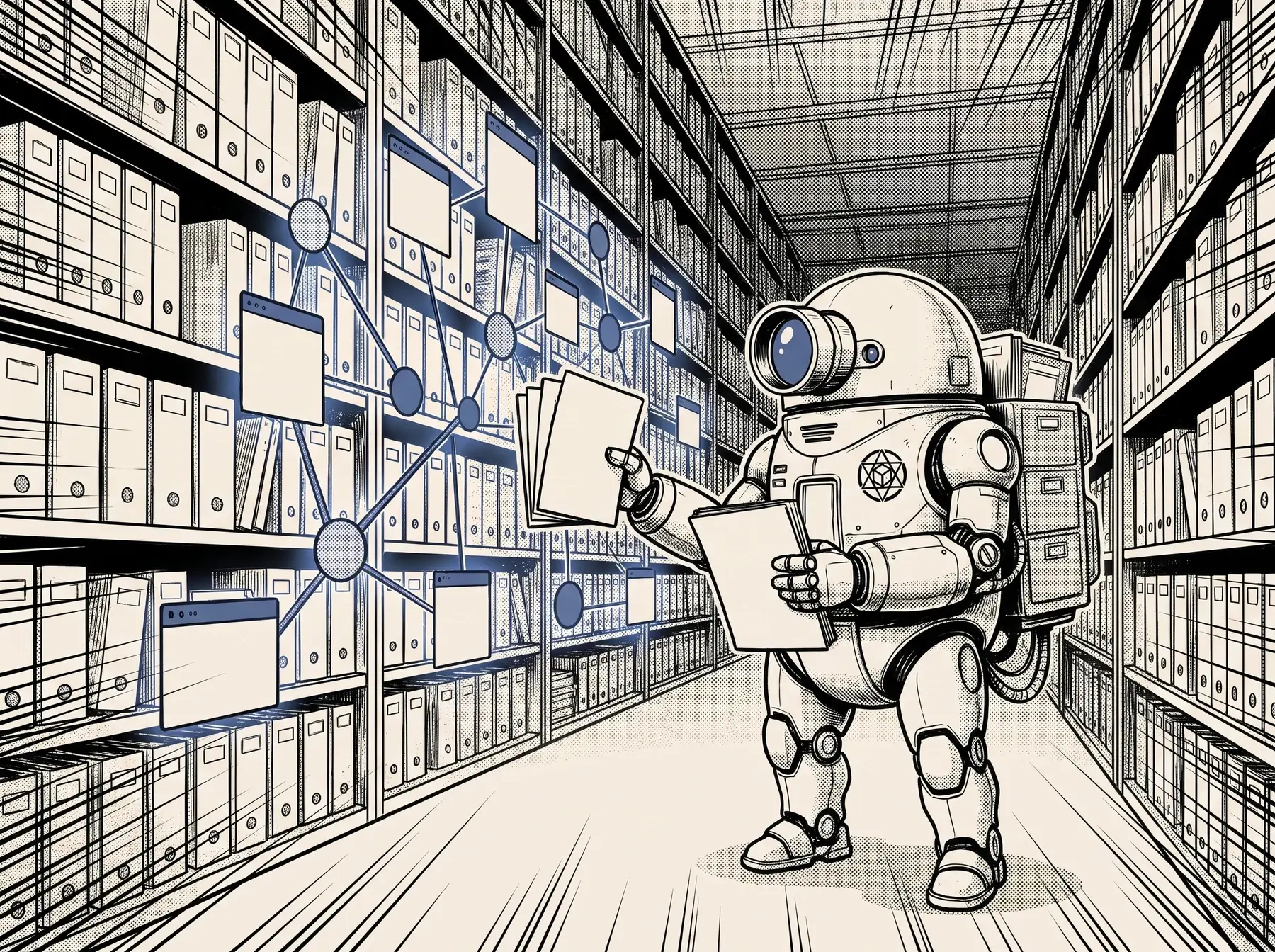
I spent my career building marketing teams, and now I build them again in a different material. Each agent owns one discipline, from research and creative to social, partnerships and performance analytics, and they all share one memory of the brand, the voice and what has worked before. The team runs at a pace no human team could sustain, and it gets a little smarter with every cycle.
- 10 specialist agents
- One shared brand memory
- Human strategy, agent execution
- 1,200+ creatives produced
- Performance analytics built in

Technical deep dive · AI Marketing Agents
Narrow jobs, shared memory.
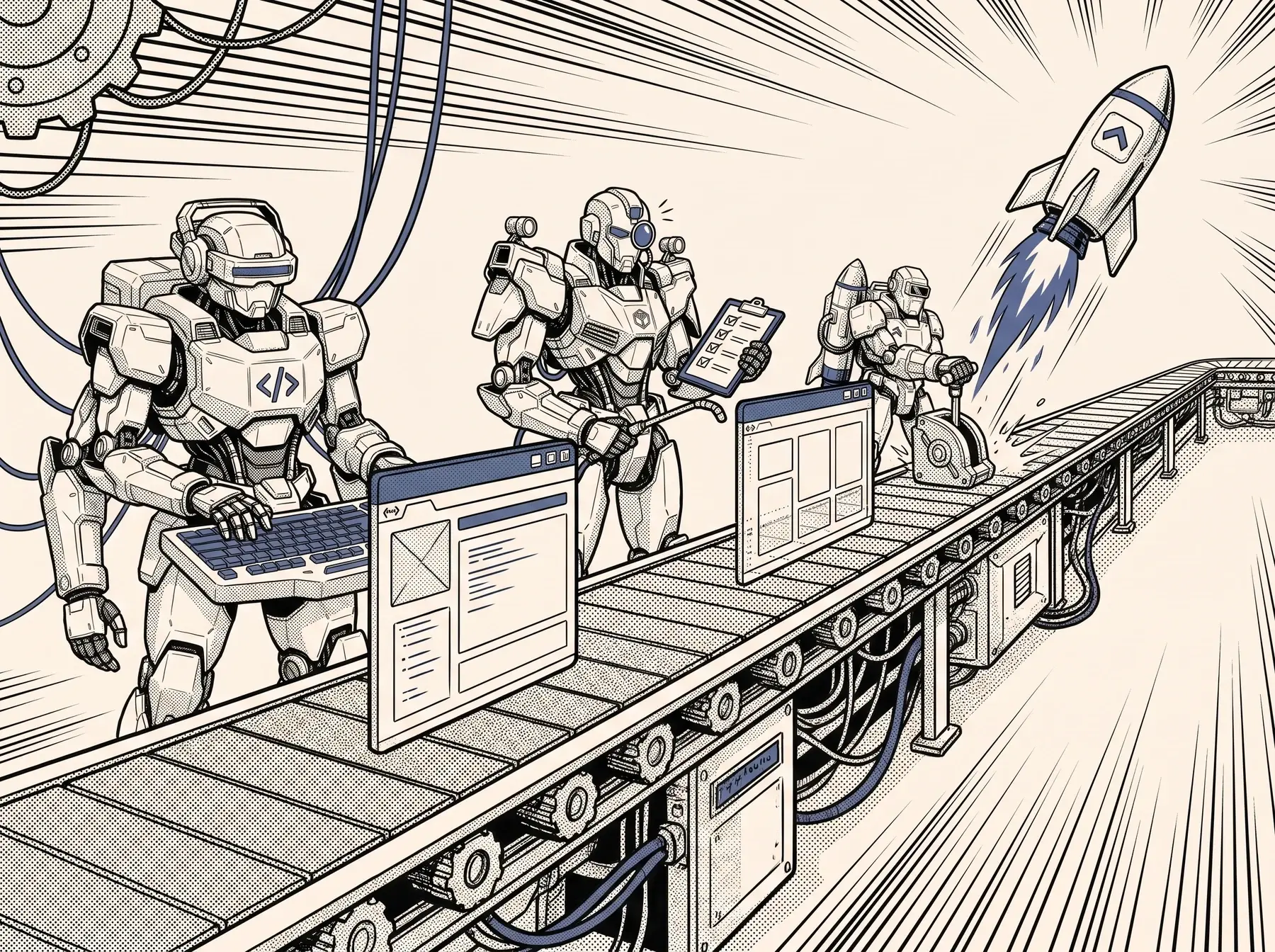
Every agent is built in the same order, from the bottom up. First the scripts that do the mechanical work, then the skills where the judgment calls happen, and only at the end the agent file that routes between them. It feels slow at first. It pays off the first time a platform changes and only one script needs fixing.
Pipeline
- 01 Brief A topic, the channels and the brand rules. For partnerships, a short description of who we're looking for.
- 02 Evidence Studies, public conversations or blind competitor searches. Every fact keeps a link back to where it came from.
- 03 Produce Several models and tools per asset: Claude writes, image and video models generate, code assembles to brand rules, then a proof-read pass.
- 04 Engage Social channels, influencers and affiliates run through agents within set limits, with pacing, hard stops and a full action log.
- 05 Learn Logs, playbooks and the rule base are append-only, so each run starts with whatever the last one learned.
The agents
- Research to Ideas Content strategy Three sub-agents in a row. One finds recent studies, one turns them into 20 or so ideas, and one fact-checks every claim before the list goes anywhere.
- Content Creator Creative production Turns ideas into carousels, single images, infographics and decks, combining language, image and video models. Around 1,200 creatives so far, each through a proof-read.
- Social Media Manager Community Runs the brand's social presence in my voice, scoring what to engage with against my views. Every comment is checked for the usual AI tells first.
- Influencers and Affiliates Partnerships Finds creators and partners who fit a brief, verifies each through four gates, and manages the pipeline from a tracked manifest.
- Competitor Landscape Market intelligence Five research streams that can't see each other's results, so they can't all copy the same mistake. One run mapped 554 companies and 154 real direct competitors.
- Social Listening Audience research Reads public conversations at scale to find what people actually worry about. One study went through about 345,000 posts and comments to find around 3,400 that mattered.
- PR Kit Earned media Drafts press releases as designed PDFs, builds a journalist list with a confidence note on every address, and writes pitch templates.
- Video Ads Paid social creative Makes short vertical ads, from AI-generated presenters to product demos assembled from automatically captured app screens.
- Reporting Data engineering Pulls raw exports from ad, affiliate and analytics platforms, joins them only on declared keys, and computes every metric from fixed definitions.
- Performance Analytics Analysis and recommendations Flags anomalies and outliers, applies a layered rule base from universal to client level, and ranks actions by expected impact. Rules I confirm join the base.
Stack
- Agents
- Claude Code subagents and skills, plus shared files for my views, voice and brand
- Creative
- Language, image and video models combined per asset; Remotion and ffmpeg for motion
- Automation
- Node.js and Playwright on persistent browser sessions; Apify for public data
- Analytics
- Python, layered metric definitions, declared join keys, a rule base that learns from feedback
- Knowledge
- Brand, voice and views files under version control; logs and playbooks that only grow
Human control points
- The strategy, the brand and the final say on what gets published stay with me
- I set how much autonomy each agent gets, from approving every action to fully automatic
- A rate limit, a challenge or a logged-out session stops everything. No agent ever types a password.
- Every outbound action is paced and logged
- If a fact is unknown it stays blank. Guessing isn't allowed, and unclear cases wait for review.
How the work moves between them
No agent skips a step. Each one gets a checked input and passes a checked output along.
- 01
Research
Agent: Researcher
Everything starts with evidence rather than trends: recent research, public conversations at scale, and the competitors' own websites and pricing.
- 02
Ideate and fact-check
Agent: Strategist
Findings get turned into angles and hooks. Then a separate agent, whose only job is to be suspicious, checks every claim against its source. If it can't find the source, the idea stops there.
- 03
Create
Agent: Media operator
No single model does everything well, so every asset combines several models and tools: one writes, others generate images and video, and code assembles the result to the brand rules. Client material works the same way. Every client deck is personalized to that client's needs and profile.
- 04
Source and engage
Agent: Orchestrator
Social media, influencers and affiliates are managed automatically, inside the brand's voice and the limits I set, with every action logged.
- 05
Measure and learn
Agent: Analyst
Raw platform exports are normalized against layered metric definitions (universal, industry, client) and joined only on declared keys, never inferred. Derived metrics such as cost per acquisition (CPA) and return on ad spend (ROAS) follow fixed formulas. Before any interpretation, the analyst flags period-over-period swings above 20% and outliers beyond three standard deviations. A layered rule base then turns triggered patterns into findings, ranks the recommended actions by expected impact, and absorbs every rule I confirm into the next cycle.